
Great quotes on Vision
Vision without action is a daydream. Action without vision is a nightmare.– Japanese Proverb “Vision is the art of seeing what is invisible to others.”– […]

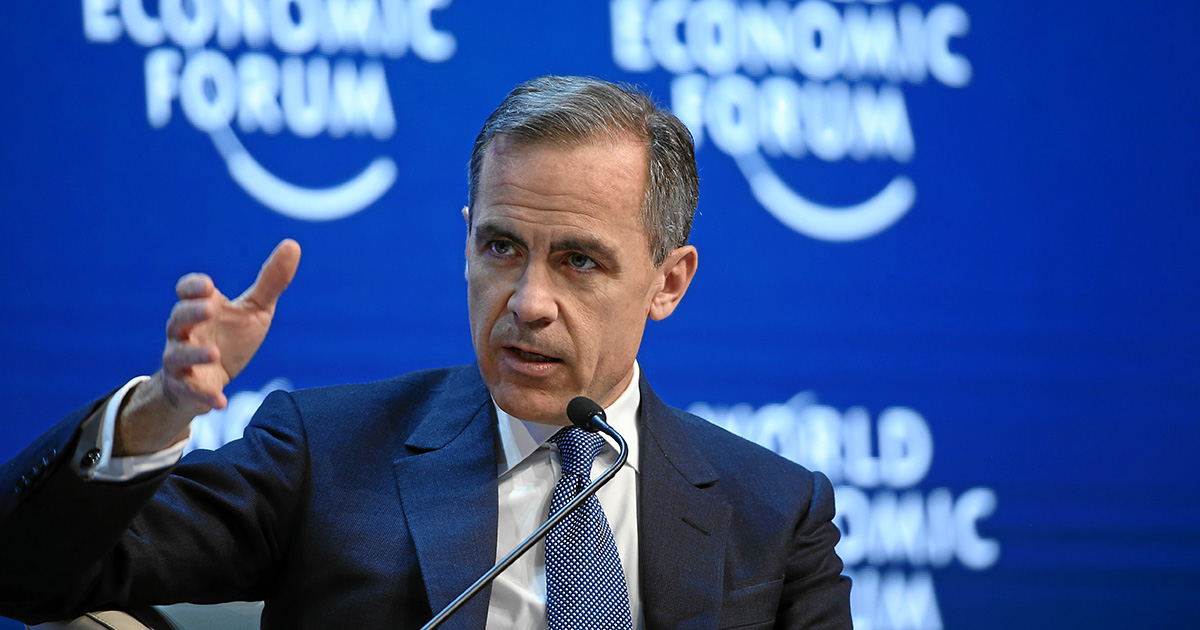
Yesterday, January 20, 2026, at the World Economic Forum in Davos, Mark Carney delivered one of the most important speeches Canada has put forward on the global stage in a long time.
It was bold. It was direct. It took guts. And yes, it was risky.
Even before Carney took the stage, there was a clear sentiment in the room and beyond it, the world is paying attention to what is happening to Canada. Many countries see Canada as a rational, reasonable, steady partner in an increasingly volatile world. Quietly, but clearly, there is a sense that the world wants Canada to succeed and wants to work with us.
Carney gave voice to that moment.
He did not lean on nostalgia or diplomatic language meant to smooth things over. He spoke plainly about a reality many political and business leaders already know but often avoid saying out loud, the global rules Canada relied on for decades no longer work the way we were told they did. In doing so, he effectively challenged the school bully, not with noise or threats, but with credibility, values, and an invitation for others to stand together.
The standing ovation he received was rare and telling. Other world leaders and business executives clearly recognized both the honesty of the message and the seriousness of the path he outlined.
For Canadian business leaders, this moment deserves real attention.
Carney’s message was not vague nor over intellectual, despite his education and work history. It was practical and yet it was delivered with impeccable panache. It was a call to stop pretending everything is fine, to stop absorbing risk quietly, and to start building real strength at home while diversifying our relationships abroad. That message lands directly with leaders across Canada, especially those in agriculture, manufacturing, energy, and trade exposed industries who have already felt supply chain disruptions, tariff shocks, and political pressure firsthand.
For decades, Canadian business benefited from deep integration with the United States and a predictable global system. That approach delivered growth, but it also encouraged concentration, dependency, and very little margin for error. When trade becomes a lever and supply chains become tools of pressure, efficiency alone is no longer enough.
It is also worth addressing a narrative we hear far too often. The idea that Canada somehow takes advantage of the United States through trade simply does not hold up. Canada has roughly one tenth the population of the US, yet on a per person basis we buy many times more from them than they buy from us. On top of that, hundreds of billions of dollars in Canadian exports are oil and energy, which the US refines and resells globally at strong margins. This is not a slanted relationship, it is a deeply intertwined one, and pretending otherwise only adds noise to an already fragile system.
Agriculture understands resilience instinctively. A country that cannot feed itself has very few options. Food security, reliable inputs, logistics, and diversified export markets are no longer just operational issues, they are strategic necessities. The same is true for manufacturing, where energy access, skilled labour, critical minerals, and trade corridors now matter as much as cost and scale.
Carney’s idea of values based realism matters here. Principles still matter, but so does being clear eyed. Progress will be uneven. Partners will not always align perfectly. Waiting for the old system to magically return is not a plan.
What stood out most was his emphasis on building strength at home as the foundation for credibility abroad. This is not about retreating or protectionism. It is about resilience. It is about investing in domestic capacity, infrastructure, interprovincial trade, energy, advanced manufacturing, and innovation so Canada can engage the world from a position of choice rather than vulnerability.
Yes, this approach carries risk. Speaking plainly always does. But the bigger risk is silence. The bigger risk is hoping compliance buys safety. Nostalgia is not a strategy.
For Canadian businesses, the message is clear. The next chapter will reward those who diversify markets, invest in resilience, build smart redundancy, and align growth with Canada’s long term strengths. Agriculture, manufacturing, and critical minerals are not old economy sectors, they are strategic assets.
Canada has what the world needs, food, energy, materials, capital, talent, and stability. Just as important are the values and real leadership that Canadians, both in business and government, bring to the table. Many countries see that and want to work with us. The question is whether we organize ourselves to lead with those strengths, or whether we continue to act as if the old order will somehow protect us. Carney’s speech did not offer comfort. It offered clarity. And right now, clarity is an advantage.
For Manitoba business leaders, and for Canadian business leaders everywhere, this is a moment to act. Build resilience. Diversify markets. Invest for the long term. This should have started decades ago, but better late than never.
Canada’s moment of truth is also a moment of opportunity, one the world seems ready, willing, and eager to grow with us. It is up to us to meet that opportunity head on.
Paul Provost
President, 6P Marketing
Link to transcription here
Link to YouTube video here
#CanadianBusiness #ManitobaBusiness #FoodSecurity #Leadership #Resilience #Trade #Agriculture #Manufacturing #EconomicDevelopment #GlobalMarkets #6Pcommunity
Vision without action is a daydream. Action without vision is a nightmare.– Japanese Proverb “Vision is the art of seeing what is invisible to others.”– […]

Winnipeg construction has a reputation for being a “relationships-first” market. That won’t change, but the way those relationships start, get validated, and scale is changing […]

This article is part of a 3 part series: Part 3: Observations from Europe In my first article, I reflected on Europe’s healthier rhythm of […]